

The Vulnerability of Blockchain Technology to Quantum Decryption
Quantum computing will not magically break blockchains overnight, but it does create real risks for public-key cryptography, exposed wallets, and older address types. Here’s what crypto users should understand about quantum threats, post-quantum security, and the future of blockchain protection.
Is quantum computing a threat to crypto, or just another round of Bitcoin FUD?
Quantum computing is one of those topics that sounds like science fiction until governments, researchers, banks, and cybersecurity agencies start preparing for it.
That is where we are now.
The question is no longer whether quantum computing could threaten today’s cryptography. It can.
The real questions are:
When will quantum computers become powerful enough to break widely used cryptography?
Which systems are most exposed?
Can blockchains upgrade fast enough?
Will attackers even target crypto first?
And will post-quantum cryptography arrive before quantum attacks become practical?
The short answer: blockchain is vulnerable, but not in the cartoonish “a quantum computer instantly hacks Bitcoin” way people often imagine.
The risk is more specific. It mostly comes from public-key cryptography, especially elliptic-curve cryptography, rather than from the blockchain ledger itself.
That distinction matters.
Quantum computing does not magically rewrite blockchains. It threatens the cryptographic keys that control access to assets.
The Core Issue: Blockchains Rely on Cryptography, not Magic
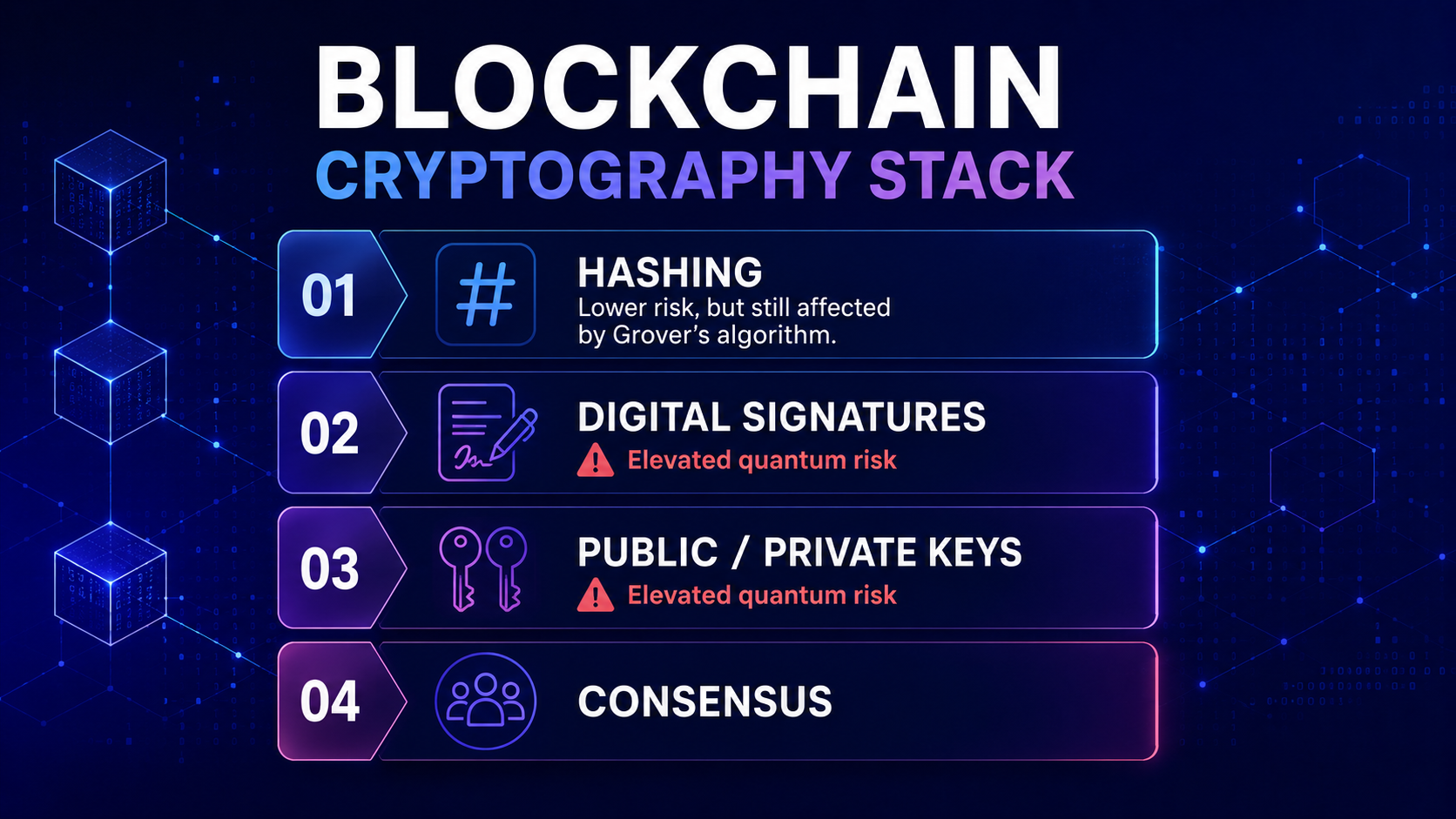
Blockchains use multiple types of cryptography. They are often discussed as one thing, but they are not equally vulnerable to quantum computing.
The main pieces are:
Hash functions: used for block integrity, proof-of-work, addresses, Merkle trees, and data verification.
Digital signatures: used to prove that a transaction was authorized by the private key holder.
Public-private key pairs: used to control funds and sign transactions.
Consensus rules: used to decide which version of the chain is valid.
Quantum computers do not attack all of these equally.
The most exposed part is the public-key cryptography used for digital signatures. Bitcoin, Ethereum, and many other blockchains rely heavily on elliptic curve cryptography. This is efficient and secure against normal computers, but it is also the kind of cryptography that a sufficiently advanced quantum computer could eventually threaten.
This was the core point in my original article, and it still holds up: the danger is not that hashing suddenly becomes useless. The danger is that public-key systems become breakable once a public key is exposed.
Shor’s Algorithm is The Real Threat
The biggest reason people worry about quantum decryption is Shor’s algorithm.
Shor’s algorithm can theoretically break cryptographic systems based on factoring and discrete logarithms. That includes RSA and elliptic-curve cryptography, which are foundational to much of today’s internet and blockchain security.
In plain English:
If a powerful enough quantum computer can see your public key, it may be able to calculate your private key.
That is the nightmare scenario.
The Bitcoin Attack Window
For Bitcoin, the attack is not usually described as “breaking the blockchain.” It looks more like this:
A user broadcasts a transaction.
Their public key becomes visible.
A quantum attacker uses that public key to derive the private key.
The attacker signs a competing transaction.
The attacker tries to steal the funds before the original transaction confirms.
That sounds extreme. It is. But it is not impossible in theory.
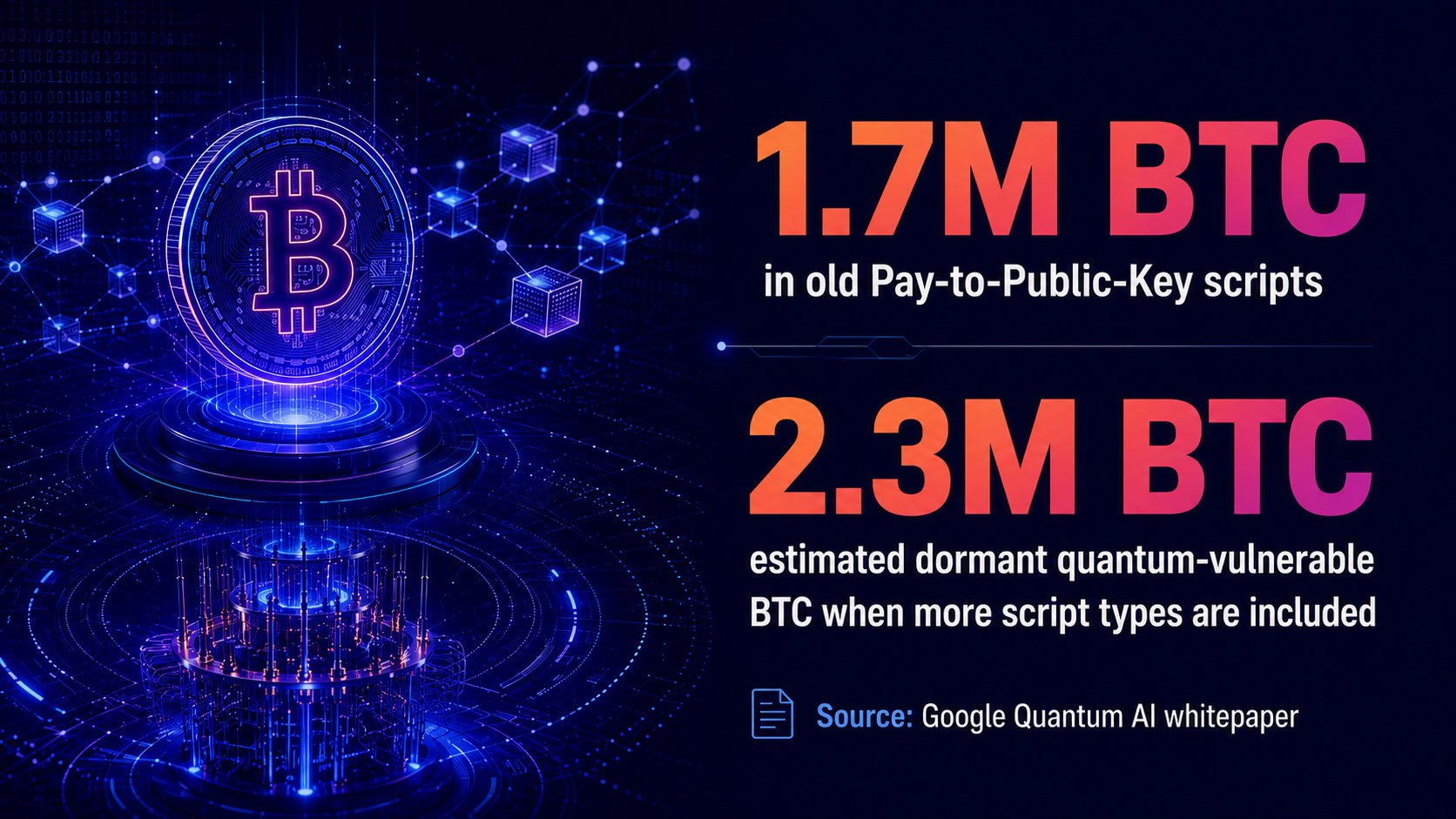
A recent Google Quantum AI paper argued that attacks against elliptic-curve cryptocurrency systems may require fewer quantum resources than previously believed. The paper highlights old Bitcoin Pay-to-Public-Key scripts that secure over 1.7 million BTC and estimates that dormant, quantum-vulnerable Bitcoin may reach 2.3 million BTC when additional script types are included.
That is the grounded version of the concern.
Not “all Bitcoin is instantly gone.”
More like:
Some address types, exposed public keys, dormant funds, and old wallet patterns may become serious liabilities before the entire system migrates.
Hashing is Less Vulnerable, but Not Invincible
Hashing is a different story.
Bitcoin’s SHA-256 hashing, Merkle trees, and proof-of-work structure are not vulnerable in the same way as public-key cryptography. Hash functions are one-way functions. You do not “decrypt” a hash in the normal sense. You try to find an input that produces a target output.
Quantum computers can still help here, mainly through Grover’s algorithm, which can speed up brute-force search. But Grover’s algorithm gives a quadratic speedup, not the same kind of devastating shortcut Shor’s algorithm provides against RSA and ECC.
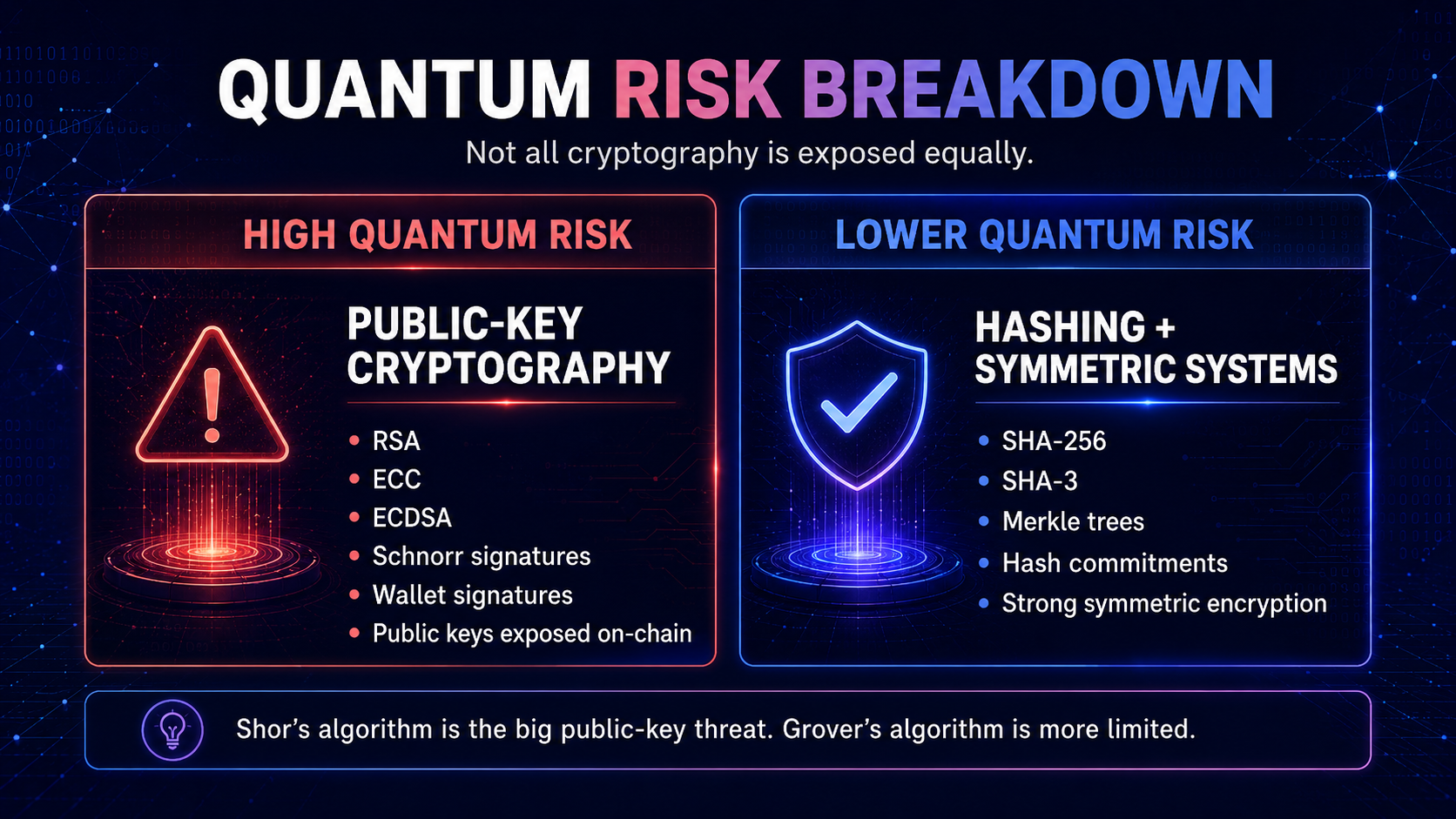
That means the quantum risk splits into two buckets.
Where Quantum Risk Actually Splits
More threatened
RSA
ECC
ECDSA
Schnorr signatures
Public-key infrastructure
Wallet signatures
TLS certificates
Digital identity systems
Less directly threatened
SHA-256
SHA-3
Merkle trees
Hash-based commitments
Symmetric encryption with strong key sizes
This is why I do not buy the simplistic “quantum breaks Bitcoin” argument.
Quantum computing threatens the cryptographic layer that controls funds. It does not magically rewrite every block in the chain.
The Exposed Public Key Problem
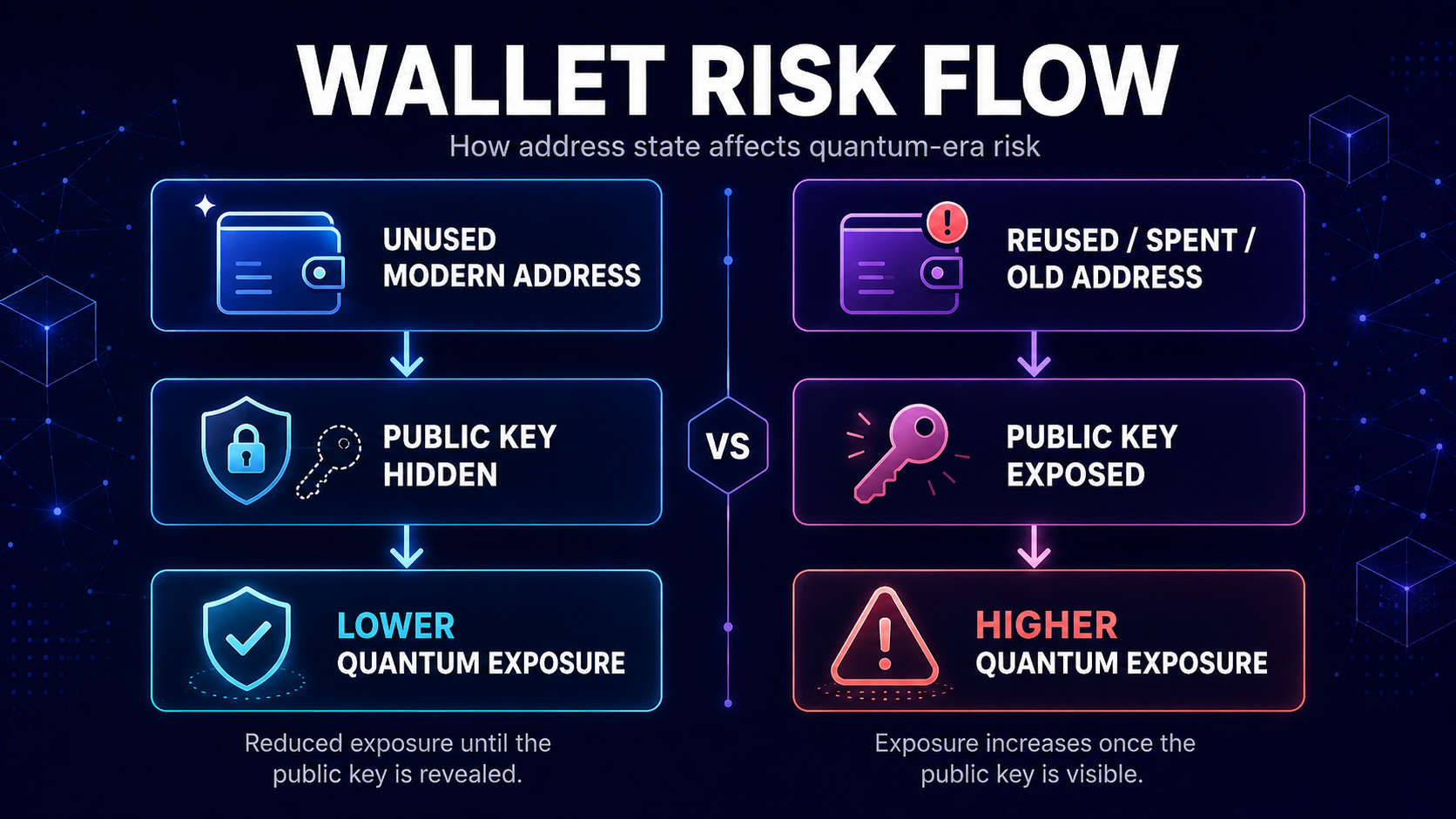
One of Bitcoin’s better design choices is that most modern addresses do not reveal the public key until coins are spent.
That helps.
A public address is usually a hash of the public key, not the public key itself. If funds are held at an address where the public key has never been revealed, an attacker has less to work with.
But there are exceptions.
Quantum-riskier situations include:
Old Pay-to-Public-Key outputs.
Reused addresses.
Coins sitting in addresses where the public key has already been revealed.
Transactions sitting in the mempool before confirmation.
Smart contract systems where public keys or signature patterns are more exposed.
Chains with slower confirmation or weaker upgrade coordination.
Dormant wallets that cannot migrate because the owner is gone, inactive, or lost access.
Interesting point: one reason address reuse has always been a bad privacy practice is that it links activity. In a quantum context, it may also increase cryptographic exposure.
That is a rare case where privacy hygiene and future security hygiene overlap.
Address reuse was already bad for privacy. In a post-quantum world, it may also be bad for security.
The “Harvest Now, Decrypt Later” Problem
Quantum risk is not only about someone breaking a wallet tomorrow.
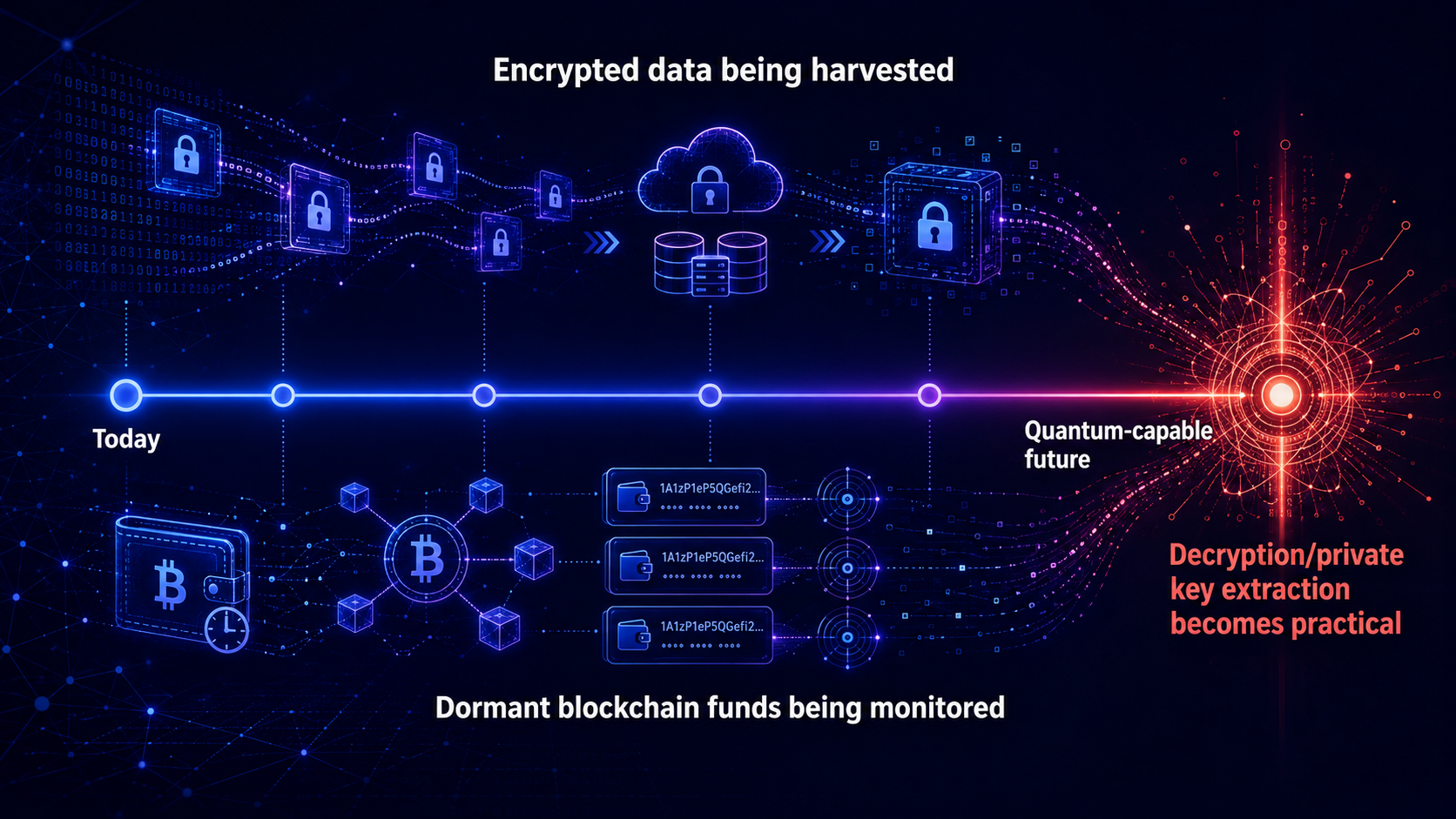
There is also a long-term surveillance problem often called harvest now, decrypt later.
The idea is simple:
Attackers collect encrypted data today.
They store it.
They wait until quantum computers are powerful enough.
They decrypt it later.
This is a huge issue for governments, healthcare systems, banks, cloud providers, and corporations with sensitive long-term data. If information needs to remain secret for 10, 20, or 30 years, then quantum risk already matters.
Why Dormant Crypto Wallets Matte
For crypto, the equivalent is different. Blockchains are public by design. The data is already visible. The sensitive part is not usually hidden transaction data. It is the key material and signature model used to control funds.
So, the blockchain version of “harvest now, decrypt later” is more like:
Identify dormant, vulnerable outputs.
Monitor exposed public keys.
Wait for quantum capability.
Attack funds that cannot migrate.
That is why dormant wallets matter.
NIST has Moved From Theory to Standards
This is where the article needs the biggest update.
The old version referenced NIST’s candidate rounds and draft standards. That was accurate at the time, but it is now outdated.
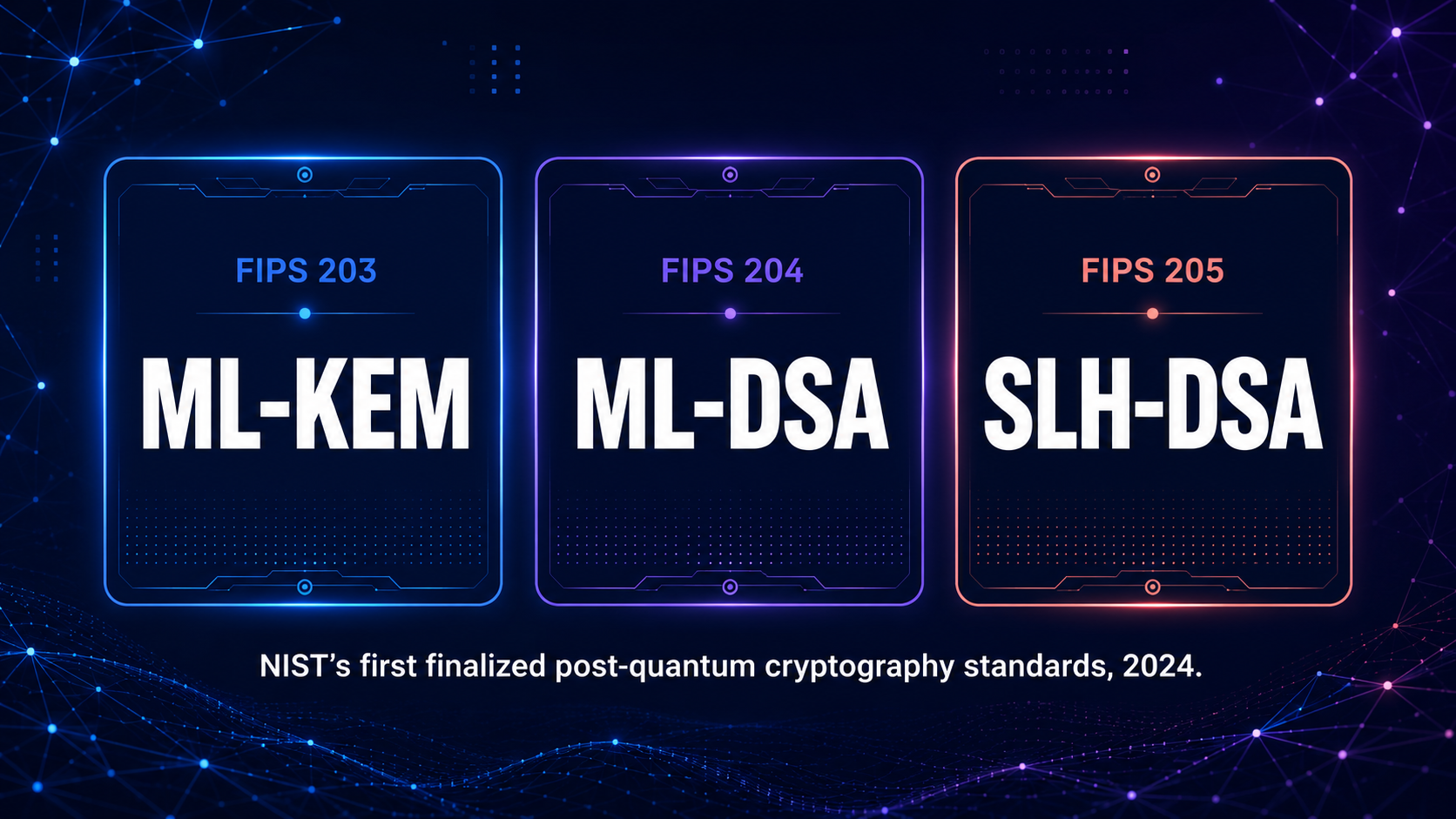
In August 2024, NIST finalized its first three post-quantum cryptography standards:
FIPS 203: ML-KEM, based on CRYSTALS-Kyber, for key establishment.
FIPS 204: ML-DSA, based on CRYSTALS-Dilithium, for digital signatures.
FIPS 205: SLH-DSA, based on SPHINCS+, for stateless hash-based digital signatures.
NIST describes these as its principal set of post-quantum encryption standards designed to withstand cyberattacks from quantum computers.
That is a big deal.
Post-quantum cryptography is no longer just a research movement. It is becoming the new security baseline.
The world is not waiting for quantum computers to arrive. It is rebuilding cryptography before they get here.
Governments Are Already Setting Migration Timelines
The U.S. government and allied cybersecurity agencies are not treating this like a distant academic exercise.
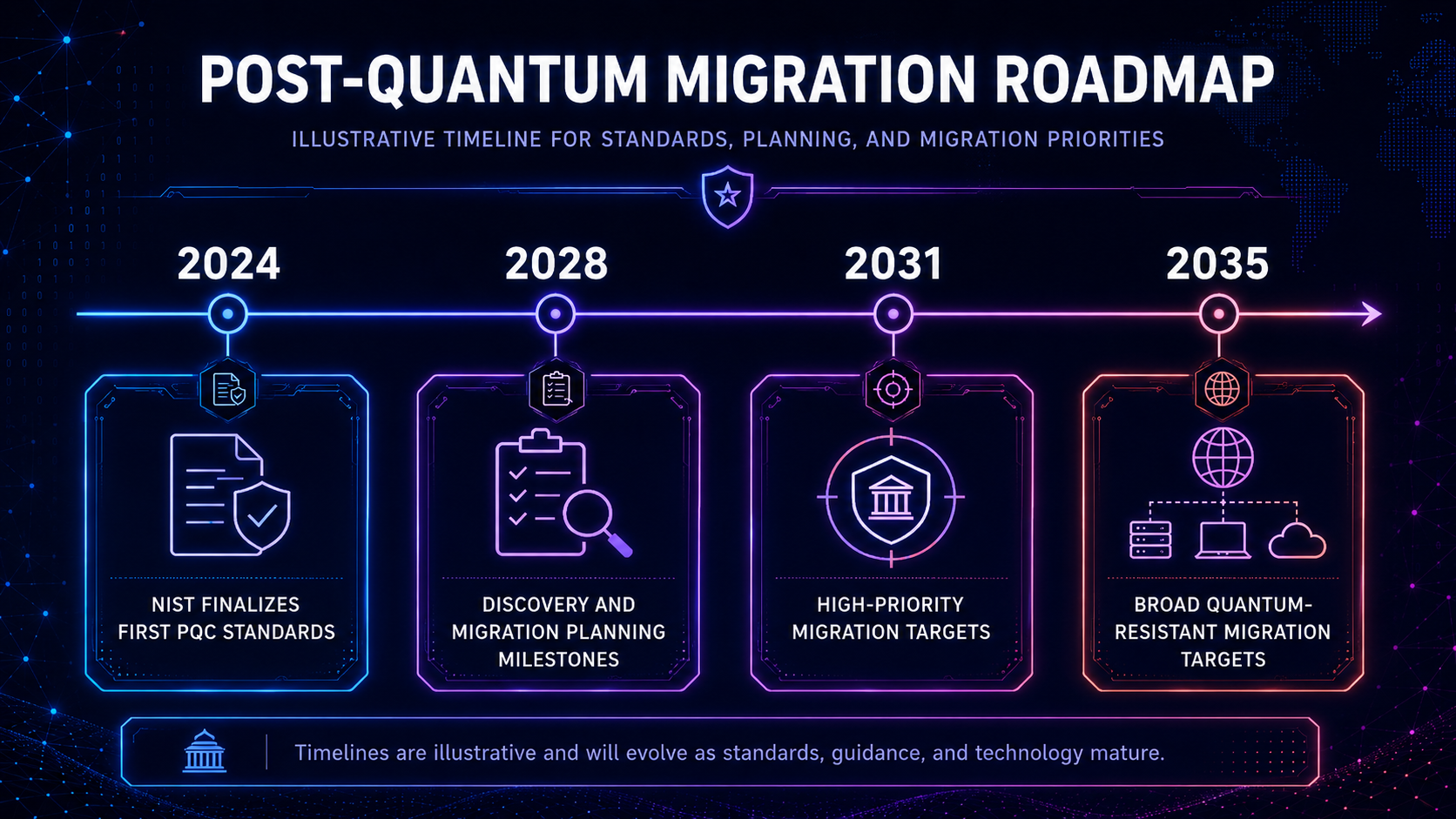
The NSA’s CNSA 2.0 guidance points toward National Security Systems being quantum-resistant by 2035. The broader policy message is clear: cryptographic migration takes years, so waiting until quantum computers are dangerous is already too late.
Canada has published a post-quantum migration roadmap for government systems, with high-priority systems targeted by the end of 2031 and remaining systems by the end of 2035.
The UK’s National Cyber Security Centre has also laid out migration milestones: define goals and discovery by 2028, perform high-priority migration by 2031, and complete migration by 2035.
That tells us something important.
Governments do not know the exact date quantum computers will become cryptographically dangerous. But they know migration will take years, maybe decades. So, they are moving now.
Crypto should take the same lesson.
The Blockchain Upgrade Problem
Post-quantum cryptography is not just about inventing better algorithms.
The harder part is adoption.
Blockchains have a few unique problems:
They are decentralized.
They rely on user-controlled wallets.
Lost wallets cannot upgrade themselves.
Old UTXOs may remain vulnerable forever.
Hard forks are politically difficult.
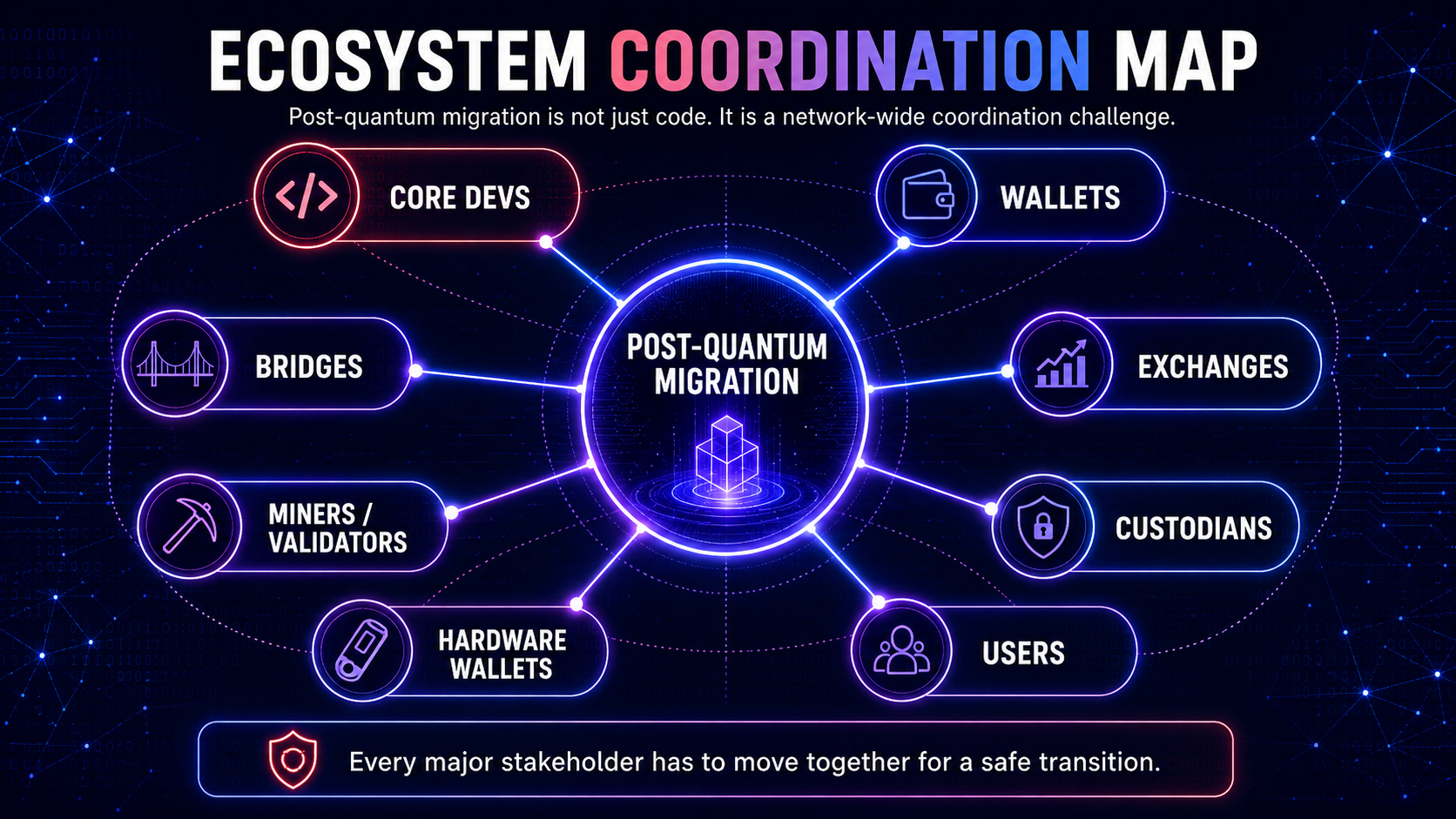
Signature changes affect wallets, exchanges, custodians, hardware devices, and node software.
Larger post-quantum signatures may increase transaction size, fees, and chain bloat.
Smart contracts may need new verification logic.
Bridges and cross-chain systems add extra risk.
This is the part people skip.
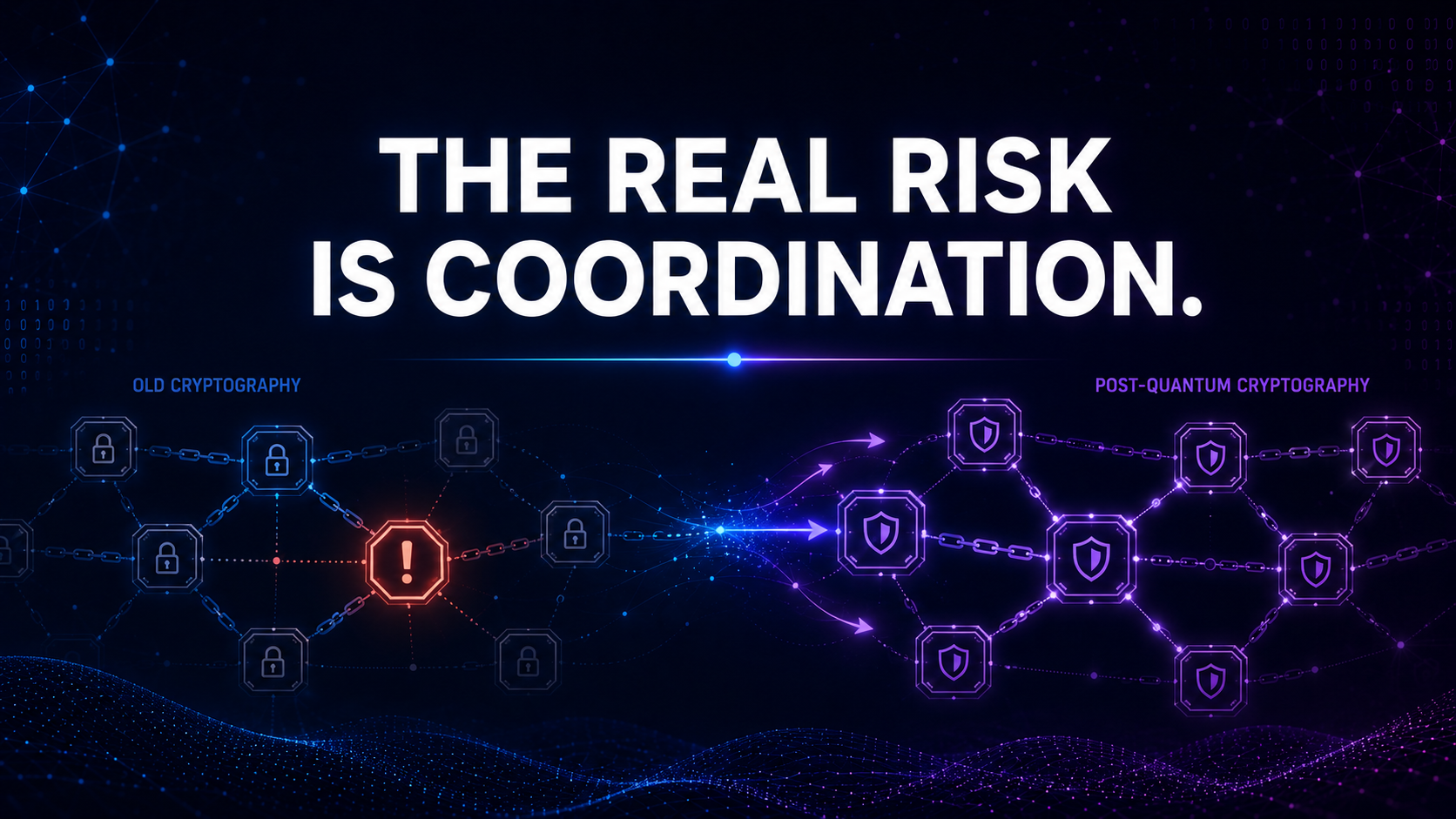
A bank can schedule a migration. A government can mandate one. A blockchain has to coordinate miners, validators, developers, exchanges, wallets, users, custodians, and economic incentives.
That is messy.
The technical solution may arrive before the social coordination does.
The real vulnerability may not be the math. It may be coordination.
Possible Blockchain Responses
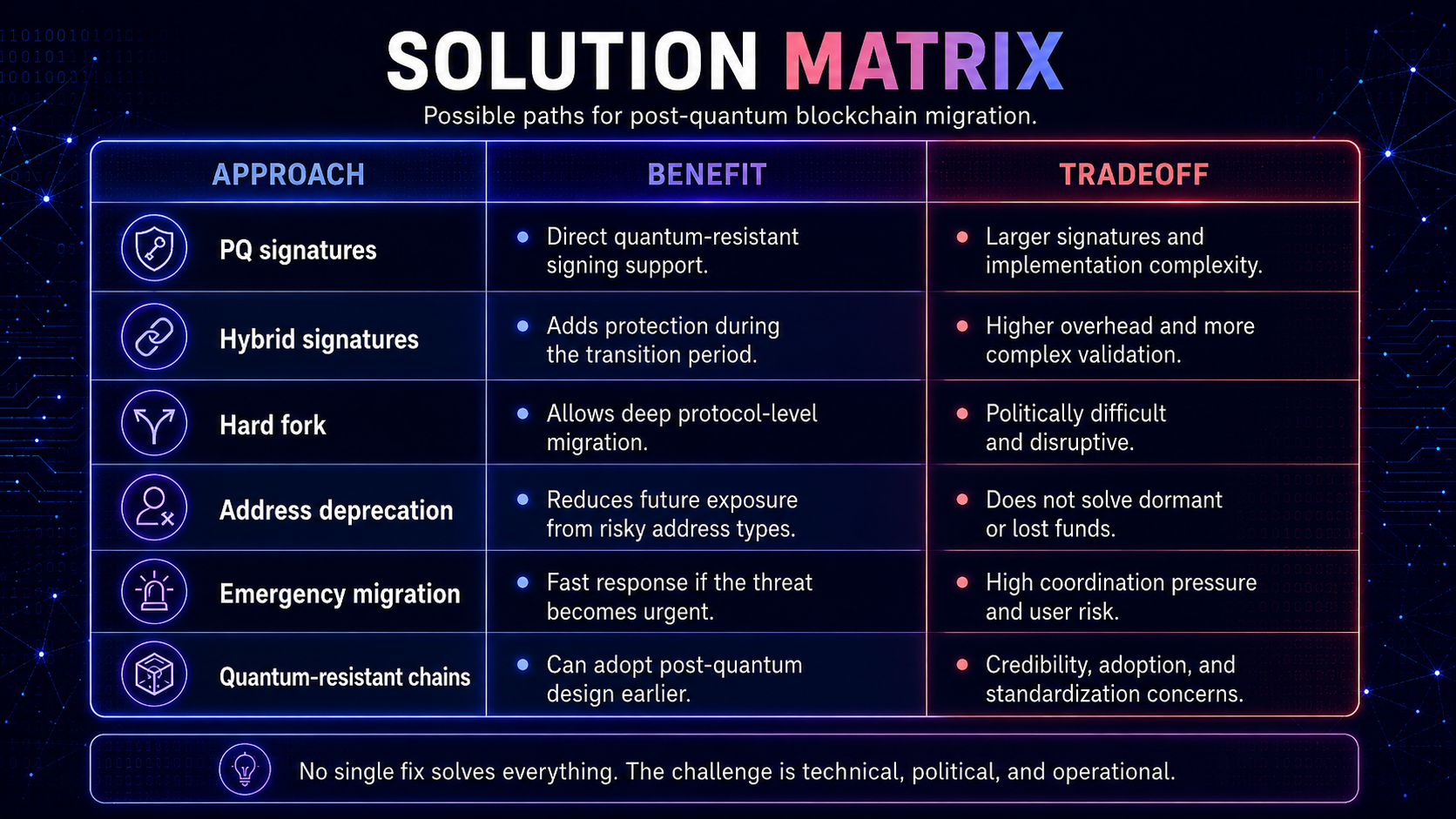
There are several paths blockchains could take.
1. Add post-quantum signature support
Chains could support new post-quantum address types and encourage users to migrate.
This is probably the least disruptive path.
2. Use hybrid signatures
Users could sign transactions with both classical and post-quantum signatures during the transition period.
This reduces risk while the ecosystem tests post-quantum systems.
3. Soft fork or hard fork migration
Some chains may need protocol-level changes to support post-quantum transaction formats.
Bitcoin could potentially do this, but the politics would be intense.
4. Sunset vulnerable address types
Future wallets could stop generating risky address types and warn users about address reuse.
5. Create emergency migration windows
If the threat becomes urgent, blockchains may need coordinated deadlines for users to move funds.
That sounds simple until you remember dormant wallets, lost keys, Satoshi-era coins, inactive holders, and exchange cold storage.
6. Build quantum-resistant chains
Some projects may market themselves as quantum-resistant earlier than Bitcoin or Ethereum.
Some of that will be legitimate. Some of it will be marketing fluff.
The question will be whether they are using credible, standardized, audited cryptography or just slapping “quantum-proof” into a whitepaper.
The Most Likely Targets may not be Crypto
This is where I still think the crypto panic is overblown.
If someone has the first cryptographically relevant quantum computer, why would they immediately reveal it by stealing Bitcoin?
That would alert the entire world.
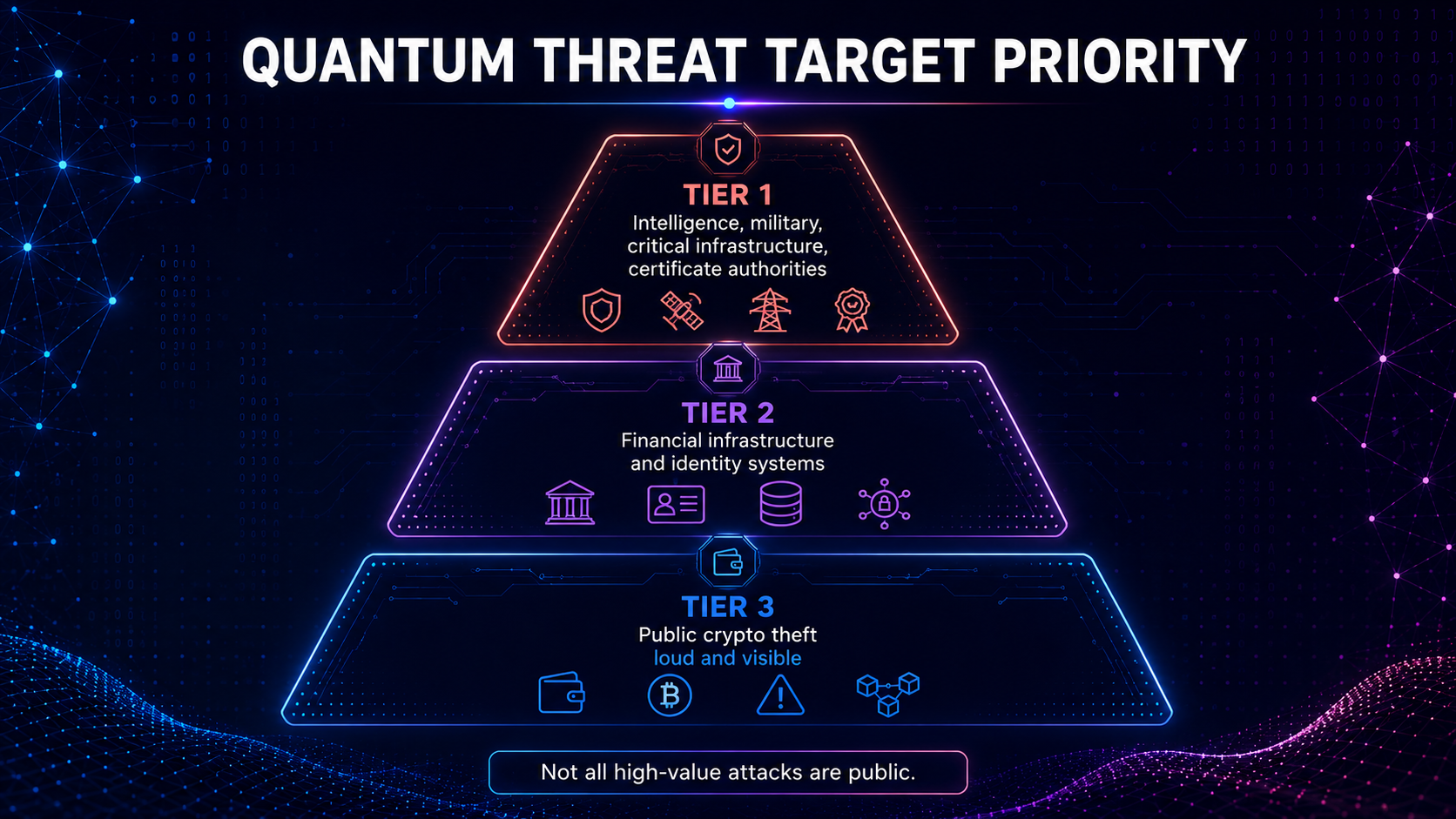
A state actor may prefer quieter, higher-value targets:
Military communications.
Intelligence archives.
Diplomatic cables.
Cloud provider data.
Certificate authorities.
Banking infrastructure.
Stock exchanges.
Critical infrastructure.
Software update systems.
Identity providers.
Telecom networks.
The Incentives Are Complicated
Crypto is tempting because stolen funds can move quickly. But it is also public. A major quantum theft would be visible immediately and would likely crash the value of the very asset being stolen.
That does not mean crypto is safe.
It means the incentive model is more complicated than “quantum computer exists, Bitcoin instantly dies.”
A smarter attacker may not go after the loudest target first. They may go after the quietest target with the highest strategic value.
Interesting Facts and Proof Points
Here are the stats and points worth remembering:
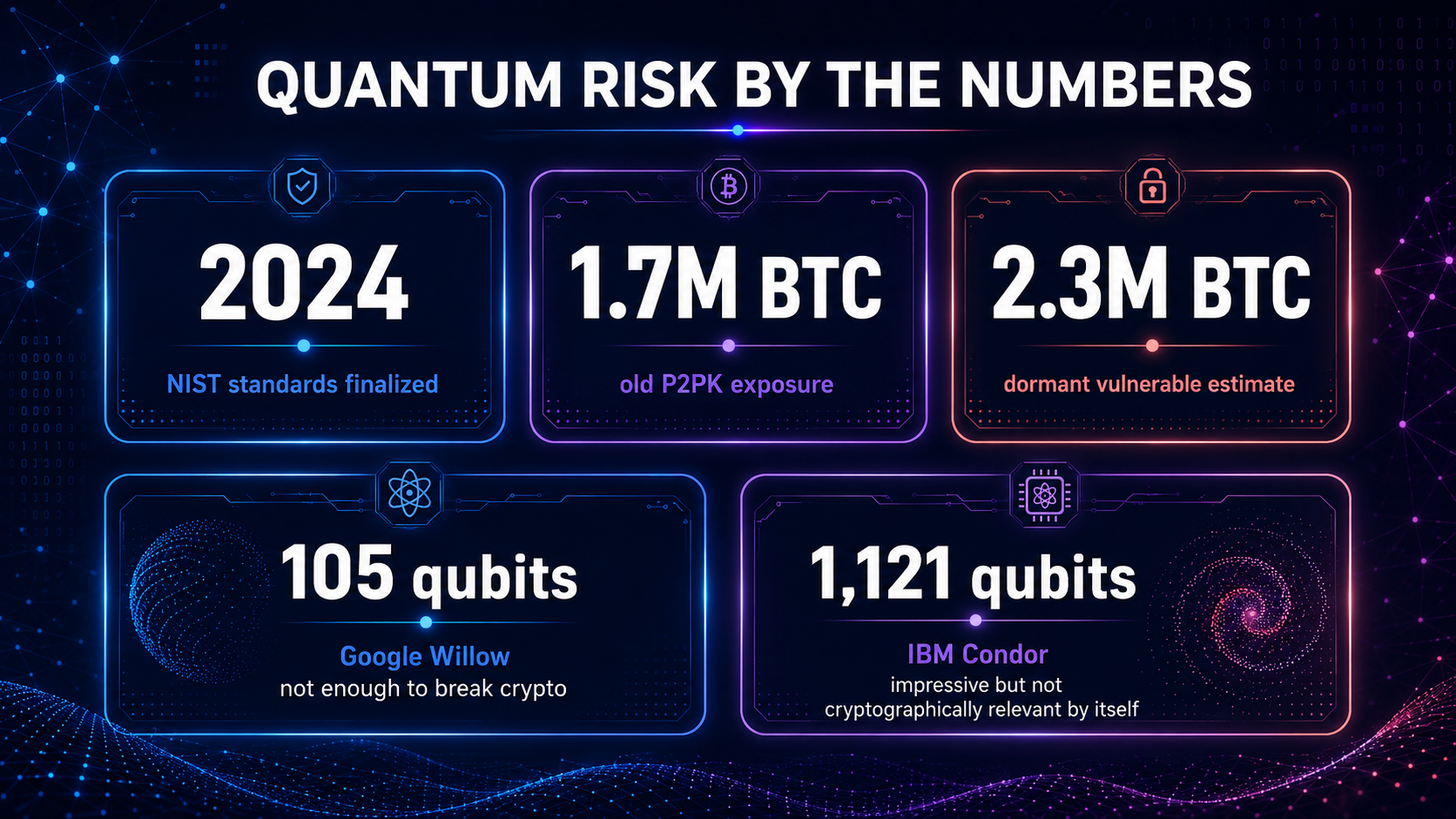
NIST finalized its first three post-quantum cryptography standards in 2024, moving PQC from research into formal standards.
Old Pay-to-Public-Key Bitcoin scripts secure over 1.7 million BTC, according to Google Quantum AI’s cryptocurrency quantum vulnerability paper.
Dormant quantum-vulnerable Bitcoin may reach 2.3 million BTC when additional script types are included.
Google’s Willow chip is not capable of breaking modern cryptography, and Google has stated that millions of physical qubits may be needed for cryptographically relevant attacks.
IBM introduced a 1,121-qubit quantum processor called Condor in 2023, but raw qubit count is not the same as having enough stable, error-corrected logical qubits to break Bitcoin.
IBM’s public roadmap points toward fault-tolerant quantum computing milestones around 2029 and beyond, showing the industry is moving, but not at instant doomsday speed.
Grover’s algorithm weakens hashing and symmetric systems much less dramatically than Shor’s algorithm weakens public-key cryptography, which is why ECC/RSA-style systems are the bigger concern.
Practical Takeaways for Crypto Users
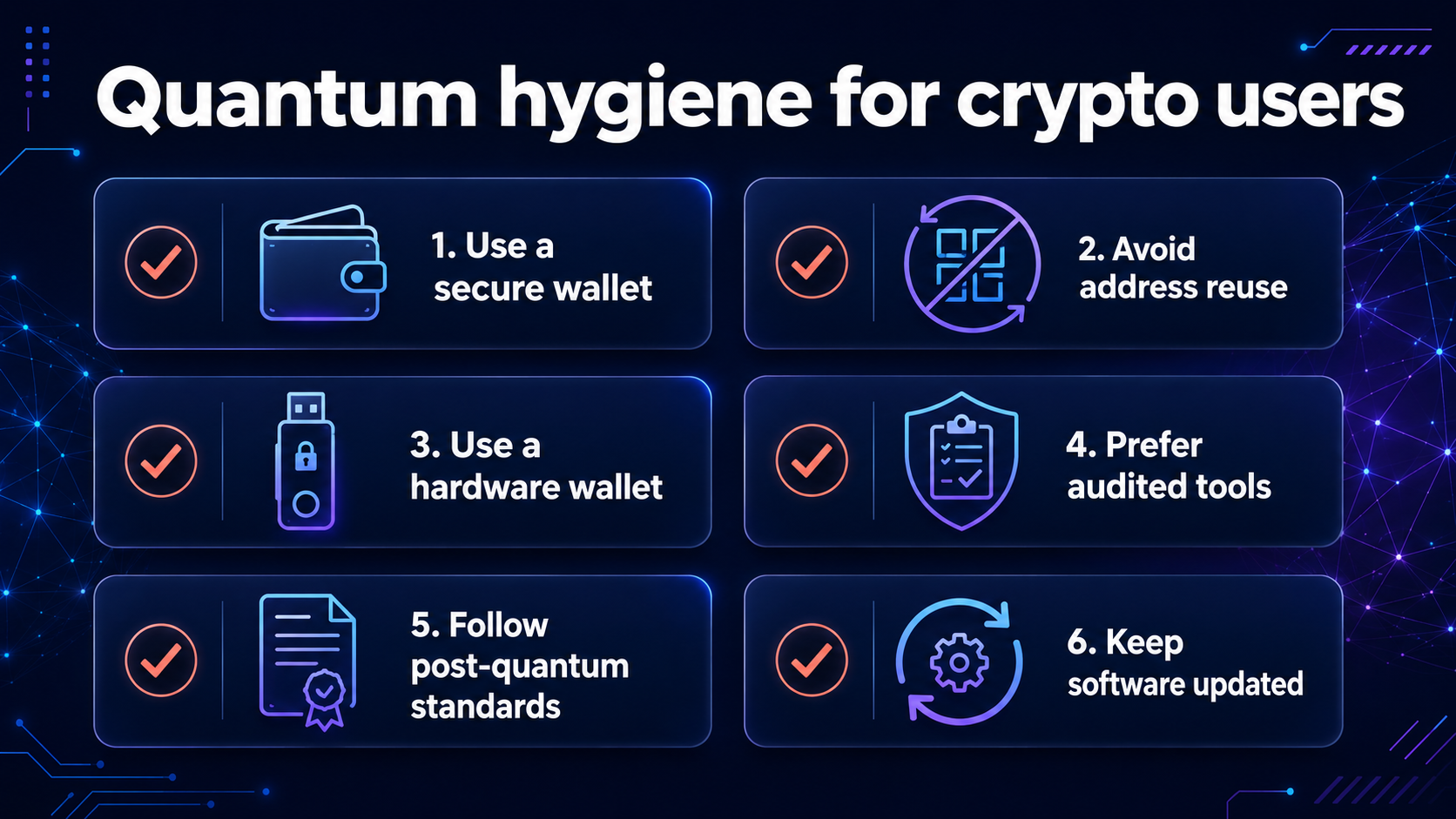
There is not much the average user can do about protocol-level cryptography, but there are still sane steps:
Stop reusing addresses.
Avoid old wallet formats where possible.
Keep hardware wallets and wallet software updated.
Pay attention to whether major chains are discussing post-quantum migration.
Be skeptical of projects claiming to be “quantum-proof” without credible audits.
Watch NIST-aligned cryptographic standards.
Treat quantum risk as a long-term security issue, not as a reason to panic-sell.
Remember that lost or dormant coins may become the biggest unresolved problem.
Practical Takeaways for Blockchain Developers
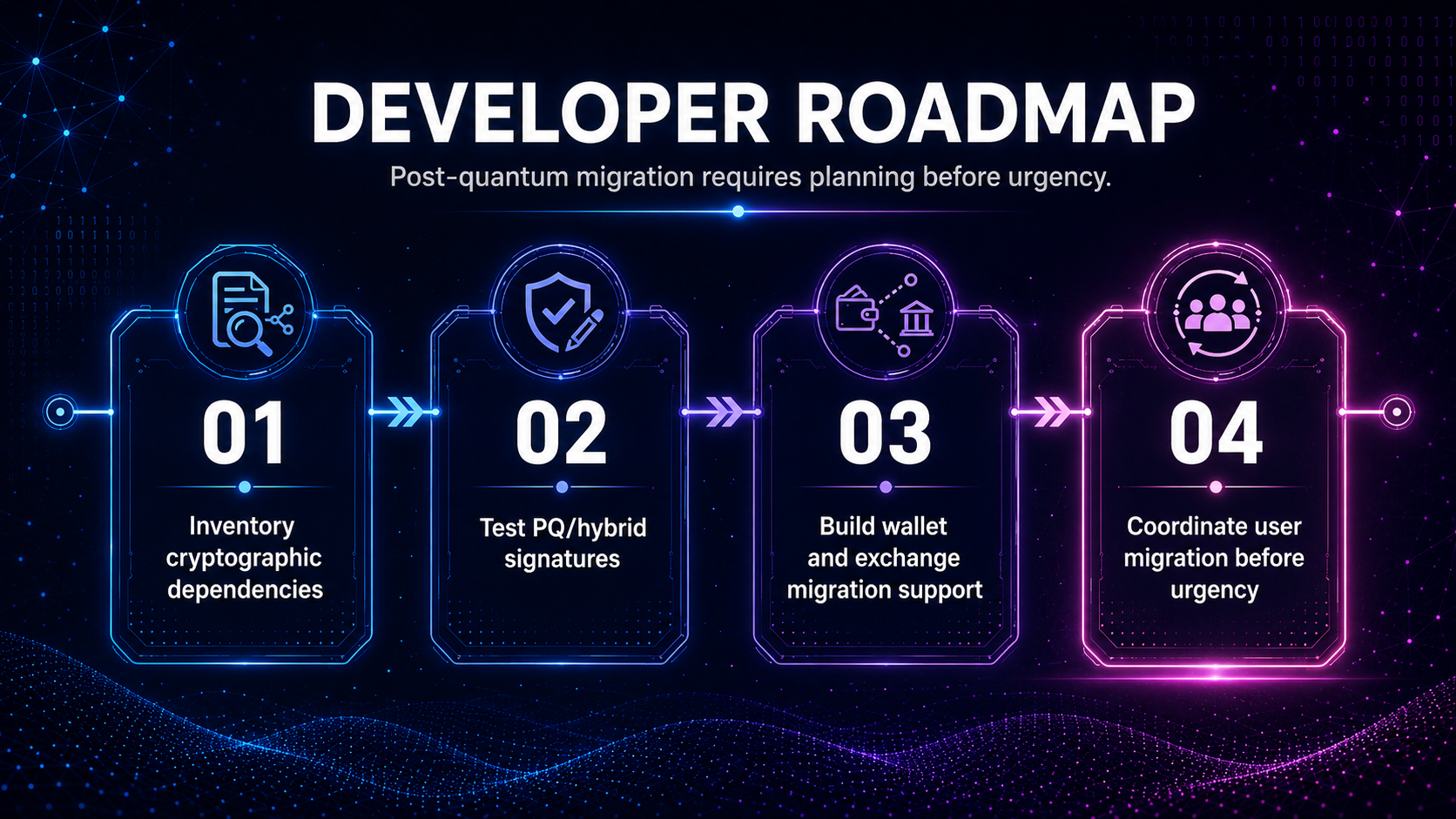
For developers and protocol teams, this is more urgent:
Build cryptographic agility into the protocol.
Test post-quantum signature schemes.
Model transaction size and fee impacts.
Plan migration paths for wallets and custodians.
Avoid relying on one cryptographic assumption forever.
Study hybrid signature approaches.
Create user warnings around address reuse and exposed public keys.
Start socializing the upgrade path before it becomes an emergency.
The biggest mistake would be waiting until the threat is obvious.
By then, migration will already be late.
Is Quantum Decryption a Serious Threat?
Yes.
But it is not an instant death sentence for blockchain.
The real threat is to asymmetric cryptography. That includes Bitcoin and Ethereum signatures, as well as the security systems behind banking, cloud computing, software updates, messaging, identity, government systems, and the broader internet.
Crypto is part of the risk surface. It is not the whole story.
This is why the discussion needs to be more precise.
Bad framing:
Quantum computers will destroy Bitcoin.
Better framing:
Quantum computers threaten public-key cryptography used to control blockchain assets, especially when public keys are exposed or funds are locked in legacy address types.
That is the actual issue.
Quantum computing is not something to hand-wave away.
It is also not something to panic over every time someone wants clicks.
The serious people are already working on the serious answer: post-quantum cryptography, migration planning, cryptographic agility, and better standards.
The Math Is Not The Only Problem
The problem is that knowing the answer is not the same as deploying it everywhere in a timely manner. Blockchains, banks, governments, cloud providers, exchanges, wallets, and identity systems all need to migrate before quantum attacks become practical. That requires standards, software updates, user coordination, institutional planning, and enough urgency to act before the threat is obvious.
Quantum risk is not only a cryptography problem. It is a migration problem.
The question is whether blockchain ecosystems can coordinate upgrades before quantum attacks become practical.
That is where the real vulnerability may be.
Not the math.
The coordination.
Sources and Further Reading
Core blockchain and quantum explainers
- How Quantum Computing Will Impact Blockchain Technology - Blockstreet HQ
- Quantum Computing: Can Blockchain Be Hacked? - HackerNoon
- Explore the Impact of Quantum Computing on Cryptography - TechTarget
- Quantum Threat to Blockchains: Shor’s and Grover’s Algorithms - Codeburst
Academic and technical research
- Quantum Attacks on Bitcoin, and How to Protect Against Them - Ledger Journal
- Quantum Blockchain Research Paper - arXiv
- Scientific Reports: Quantum Blockchain / Blockchain Security Research - Nature
- NIST Post-Quantum Cryptography Project
- NIST: Announcing Four Candidates to Be Standardized, Plus Fourth Round Candidates
- NIST: First Finalized Post-Quantum Encryption Standards
- NIST CSRC: Post-Quantum Cryptography FIPS Approved
Newer quantum/blockchain risk sources
- Google Quantum AI: Safeguarding Cryptocurrency by Disclosing Quantum Vulnerabilities Responsibly
- Google Quantum AI Whitepaper: Securing Elliptic Curve Cryptocurrencies Against Quantum Adversaries
- The Verge: Google Says Willow Can’t Break Modern Cryptography
- IBM Quantum Roadmap to 2033
- IBM Quantum Roadmap
Additional post-quantum cryptography and migration sources
- NSA: CNSA 2.0 Quantum-Resistant Algorithm Requirements
- CISA: Quantum-Readiness: Migration to Post-Quantum Cryptography
- Government of Canada: Migrating the Government of Canada to Post-Quantum Cryptography
- Canadian National Quantum-Readiness Best Practices (PDF)
- UK NCSC: Timelines for Migration to Post-Quantum Cryptography
- UK NCSC: Setting Direction for the UK’s Migration to Post-Quantum Cryptography
- UK NCSC: Quantum Networking Technologies
Additional Bitcoin and blockchain-specific sources
- Bitcoin Optech: Quantum Resistance
- Bitcoin Optech: Post-Quantum Signature Scheme Proposal
- Bitcoin Optech: Proposal for Post-Quantum Migration and Legacy Signature Sunset
- Bitcoin Optech: Quantum-Resistant Wallet Migration Discussion
- Bitcoin Optech: SLH-DSA / SPHINCS Post-Quantum Signature Optimizations
- Bitcoin Optech: SHRIMPS Post-Quantum Signature Construction
Additional technical and standards sources
The Digital Debrief Newsletter
Subscribe for more field notes
Practical field notes on AI, Web3, privacy, decentralization, social media, and the systems shaping the internet, delivered straight to your inbox.
Found it useful?
Share it with someone who'd care, or grab the link.
Got a project or question?
I work with brands across AI, Web3, cybersecurity, and SaaS.